什么是 ArkTS
ArkTS 是鸿蒙生态的应用开发语言,它提供了声明式 UI 范式、状态管理支持等相应的能力,让开发者可以以更简洁、更自然的方式开发应用。
同时,它在保持 Typescript(简称 TS)基本语法风格的基础上,进一步通过规范强化静态检査和分析,使得在程序运行之前的开发期能检测更多错误,提升代码正确性;并实现更好的运行性能。
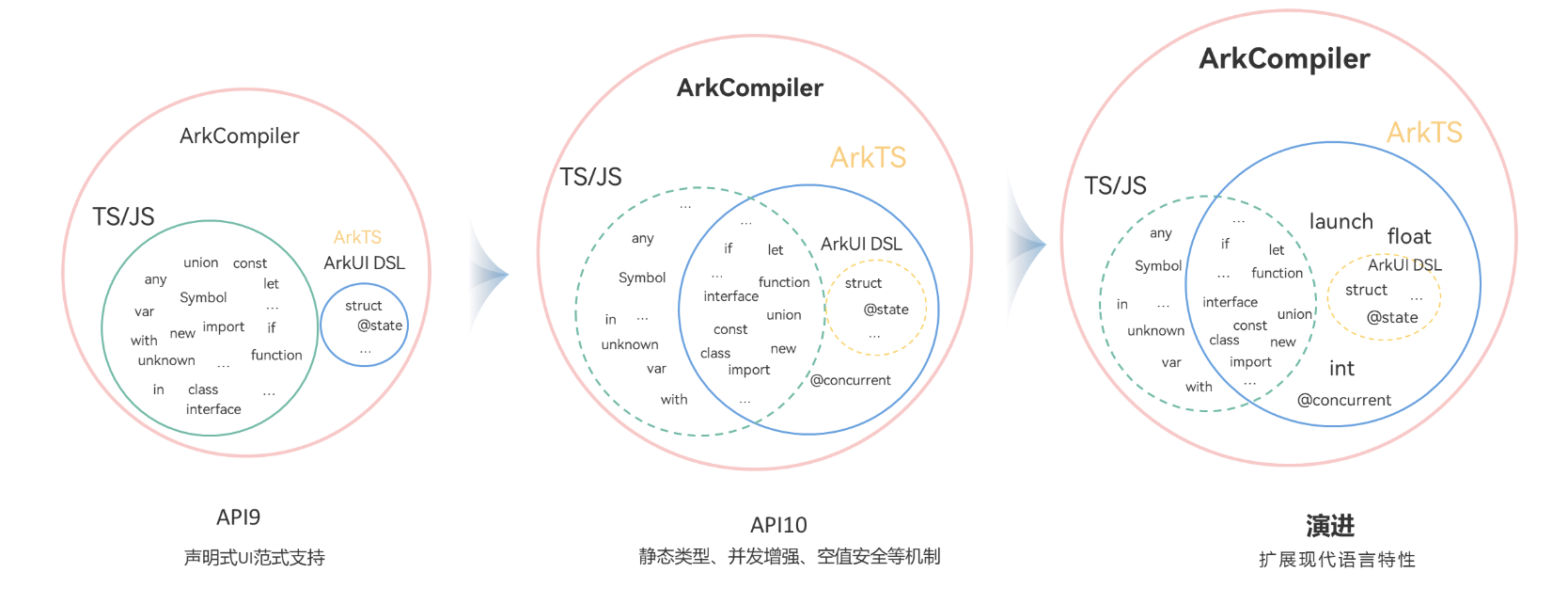
ArkTS 发展趋势
- 保持 TypeScript 基础语法风格,规范强化静态检查和分析,提升程序稳定性,实现更好的运行性能
- 拓展了对 UI 的支持,提供了 UI 声明式描述和状态管理的语法
- 持续演进,拓展现代语言特性
ArkTS 的定位及约束
- ArkTS 作为 OH/HMOS 官方主流推荐开发语言
.ets 以及 .d.ets 作为 ArkTS 语言源码后缀- 与 TS/JS 高效互操作,兼容 TS/JS 生态
- ets 文件可以 import ets/ts/js 文件源码,但是 ts/js 文件不允许 import ets 文件源码
- 新增 SDK API(不包括NDK部分)接口需要符合 ArkTS 规范
ArkTS 基于 TypeScript 的增强
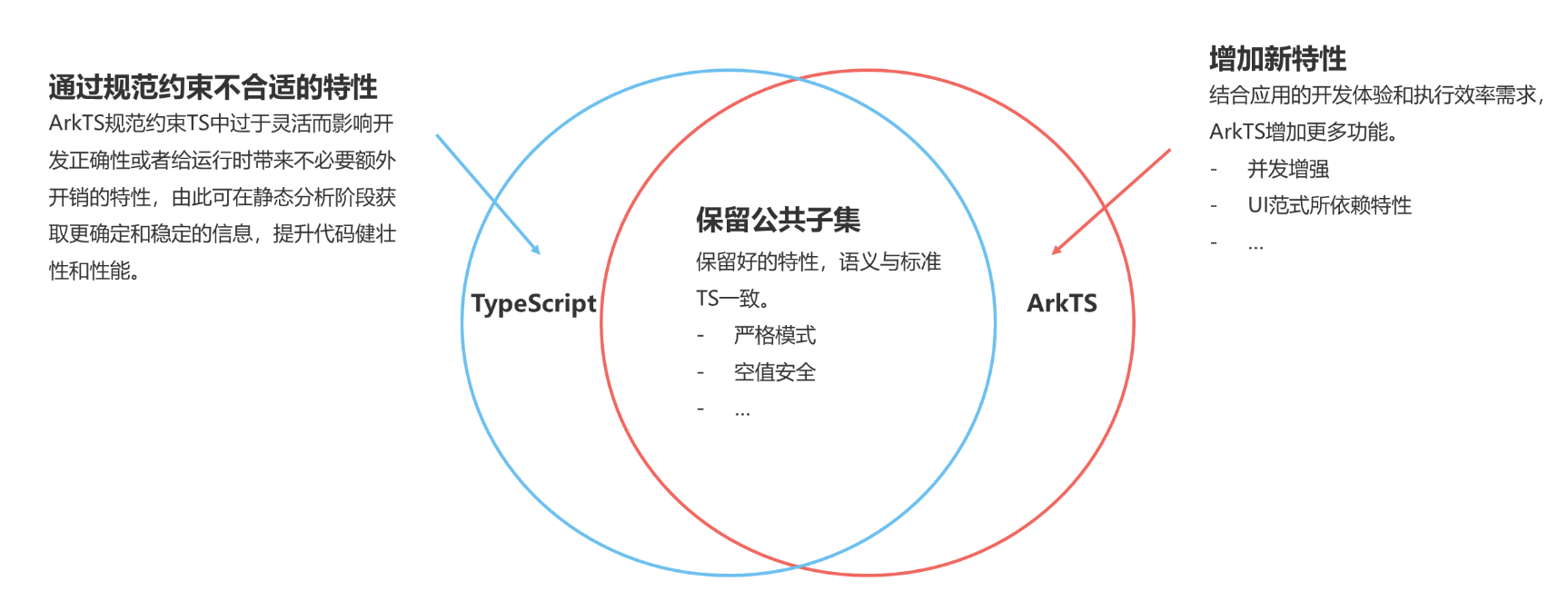
更多对比标准 TS 的差异访问:https://developer.huawei.com/consumer/cn/arkts/
ArkTS 对 UI 的扩展
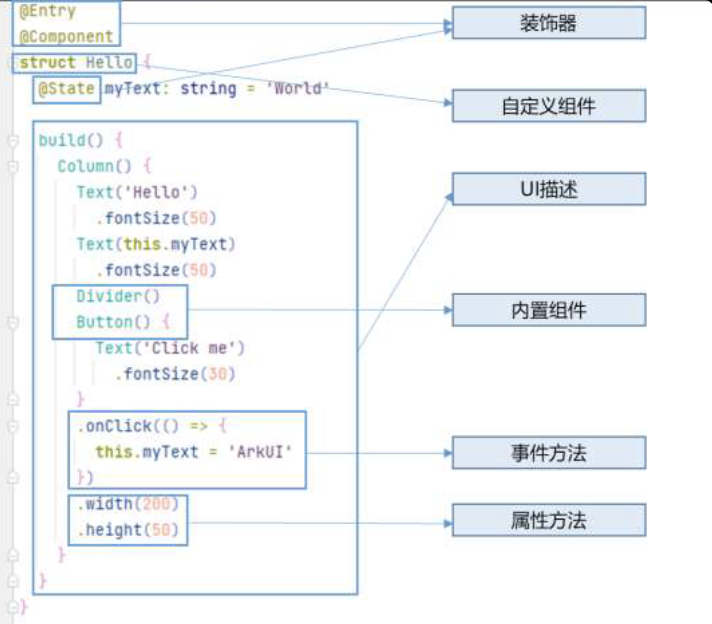
UI 描述:
ArkTS 在 TS 的类型系统的基础上,做了进一步的扩展:定义了各种装饰器、自定义组件和UI 描述机制,再配合 UI 开发框架中的 UI 内置组件、事件方法、属性方法等共同构成了应用开发的主体。
状态管理:
UI 相关联的数据,不仅可以在组件内使用,还可以在不同组件层级间传递,比如父子组件之间,爷孙组件之间,也可以是全局范围内的传递,还可以是跨设备传递。
ArkTS 基础语法
声明
ArkTS 中可以通过关键字 let 声明变量,使用 const 声明一个常量,并通过类型注释指定类型。
1
2
3
| let count: number = 10;
count = 40;
const MAX_COUNT: number = 100;
|
类型
- 基本类型:string 、number 、boolean、Enum
1
2
3
4
5
6
7
8
| let name: string='小明';
let age: number= 20;
let isMale: boolean = true,
console.log(name);
console.log(age.tostring());
console.log(`我的名字叫${name},今年${age}岁`);
enum Color {Red,Blue,Green}
let favouriteColor: Color = Color.Red;
|
- 应用类型:Array、基于 Ojbect 的自定义类
1
2
| let students: Array<string>= ['小明','小张','小王','小李'];
let students: string[]= ['小明','小张','小王','小李'];
|
- 联合类型:Union
1
2
| let luckyNum:number|string = 7;
luckyNum = 'seven';
|
- 类型别名:Aliases
1
2
| type Matrix= number[];
type Nullableobject = object | null;
|
语句
- 条件语句:用于基于不同的条件来执行不同的动作,根据判断条件的执行结果(true 或 false)来决定执行的代码块。
1
2
3
4
5
6
| let isValid: boolean;
if (Math.random()>0.5) {
isValid = true;
} else {
isValid = false;
}
|
条件表达式 let isValid = Math.random() > 0.5 ? true : false;
- 循环语句:用于重复执行相同的一组语句,提高效率、简化代码
1
2
3
4
5
6
7
8
9
10
11
12
13
14
15
| let students: string[] = ['小明', '小张', '小王', '小李'];
for (let i = 0; i < students.length; i++) {
console.log(students[i]);
}
for (let student of students) {
console.log(student);
}
let index = 0;
while (index < students.length) {
console.log(students[index]);
index++;
}
|
函数
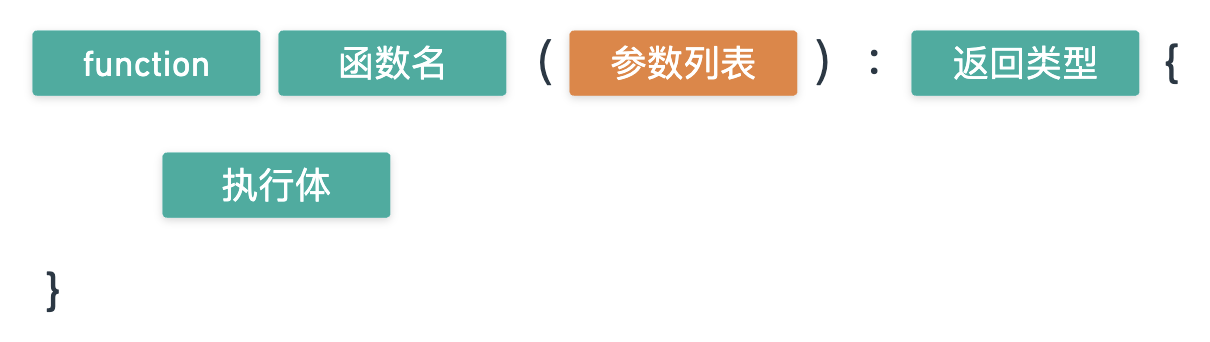
函数是一组一起执行多条语句的组合,形成可重用的代码块。通过 function 关键字声明要告诉编译器函数的名称、返回类型和参数以及执行的内容。
1
2
3
4
5
6
7
| function printStudentsInfo(students: string[]): void {
for (let student of students) {
console.log(student);
}
}
printStudentInfo(['小明', '张三', '小李'])
printStudentInfo(['小敏', '小黄', '小陈', '小刘'])
|
箭头函数/lambda表达式:通常用于需要一个简单函数的地方,并且在其他地方不会被重复使用。箭头函数的返回类型可以省略,省略时,返回类型通过函数体推断,执行体只有一行的情况下可以省略花括号。

1
2
| const printInfo = (name: string) => console.log(name);
printInfo('小明');
|
表达更简短,常用于作为回调函数
1
2
| let students: string[] = ['小明', '小张', '小王', '小李'];
students.forEach((student: string) => console.log(student))
|
闭包函数:一个函数可以将另一个函数当做返回值,保留对内部作用域的访问
1
2
3
4
5
6
7
8
9
10
| function outerFunc(): () => string {
let count = 0
return (): string => {
count++;
return count.toString()
}
}
let invoker = outerFunc()
console.log(invoker())
console.log(invoker())
|
类的声明和使用
- 类的声明:ArkTS 支持基于类的面向对象的编程方式,定义类的关键字为 class,后面紧跟类名。类的声明描述了所创建的对象共同的属性和方法。
1
2
3
4
5
| class Person {
name: string = '小明';
age: number = 20;
isMale: boolean = true;
}
|
- 类的创建
1
2
| const person = new Person();
console.log(person.name);
|
1
2
| const person: Person = { name: '小张', age: 29, isMale: true };
console.log(person.name);
|
constructor 用于实例化时进行初始化操作
1
2
3
4
5
6
7
8
9
10
11
12
| class Person {
name: string = '小明';
age: number = 20;
isMale: boolean = true;
constructor(name: string, age: number, isMale: boolean) {
this.name = name;
this.age = age;
this.isMale = isMale;
}
}
const person = new Person('小张', 32, false);
console.log(person.name);
|
类的方法:用于描述类的行为
1
2
3
4
5
6
7
8
9
10
11
12
13
14
15
16
17
| class Person {
name: string = '小明';
age: number = 20;
isMale: boolean = true;
constructor(name: string, age: number, isMale: boolean) {
this.name = name;
this.age = age;
this.isMale = isMale;
}
introduce() {
if (this.isMale) {
console.log(` ${this.name}是个男生,年龄是${this.age}岁`);
} else {
console.log(` ${this.name}是个女生,年龄是${this.age}岁`);
}
}
}
|
- 类的使用
封装:将数据隐藏起来,只对外部提供必要的接口来访问和操作数据,确保数据的一致性和安全性
1
2
3
4
5
6
7
8
9
10
11
12
13
14
15
| class Person {
public name: string = '小明';
private _age: number = 20;
isMale: boolean = true;
...
get age(): number {
return this._age;
}
set age(age:number) {
this._age = age;
}
}
const person: Person = new Person('小张', 28, true);
console.log(person.age.toString())
console.log(person._age.toString())
|
继承:子类继承父类的特征和行为,使得子类具有父类相同的行为。ArkTS 中允许使用继承来扩展现有的类,对应的关键字为 extends
1
2
3
4
5
6
7
8
9
10
| class Employee extends Person {
private _department: string;
constructor(name: string, age: number, isMale: boolean, department: string)
{
super(name, age, isMale);
this._department = department;
}
}
const employee: Employee = new Employee('小张', 28, true, 'xx公司');
employee.introduce();
|
多态:子类继承父类,并可以重写父类方法,使不同的实例对象对同一行为有不同的表现
1
2
3
4
5
6
7
8
9
10
11
12
13
14
15
| class Employee extends Person {
department: string;
constructor(name: string, age: number, isMale: boolean, department: string) {
super(name, age, isMale);
this.department = department;
}
public introduce(): string {
super.introduce();
console.log(` 在${this.department}工作 `);
}
}
const person: Person = new Person('小张', 28, true);
person.introduce();
const employee: Employee = new Employee('小张', 28, true, 'xx公司');
employee.introduce();
|
模块的导入与导出
一个ArkTS文件的作用域是独立的,通过export导出一个文件的变量、函数、类等
1
2
3
4
5
6
7
8
9
10
11
12
13
14
|
export class Person {
name: string = ‘小明';
age: number = 20;
isMale: boolean = true;
... //省略构造器内容
introduce() {
if (this.isMale) {
console.log(` ${this.name}是个男生,年龄是${this.age}岁`);
} else {
console.log(` ${this.name}是个女生,年龄是${this.age}岁`);
}
}
}
|
通过 import 导入另一个文件的变量、函数、类等
1
2
3
4
|
import { Person } from './Person';
const person = new Person('小张', 20, true);
person.introduce();
|